 ultimate-guide
Best Dimensional Color Techniques for Brunettes
Table of Contents
- Why Dimensional Color Works So Well on Brunette Hair
- How to Add Dimension to Dark Brown Hair: Techniques That Create Depth
- Brunette Balayage: Hand-Painted Color for Natural Movement
- Brunette Highlights: Caramel, Honey, and Chocolate Shades
- Low-Maintenance Brunette Hair Color: Lived-In Results That Last
- The Consultation and Color-History Check: Planning Your Transformation
- Hair Health and Lightening Limits: What Your Brunette Hair Can Handle
- Frequently Asked Questions
Last Updated: October 12, 2026
Why Dimensional Color Works So Well on Brunette Hair
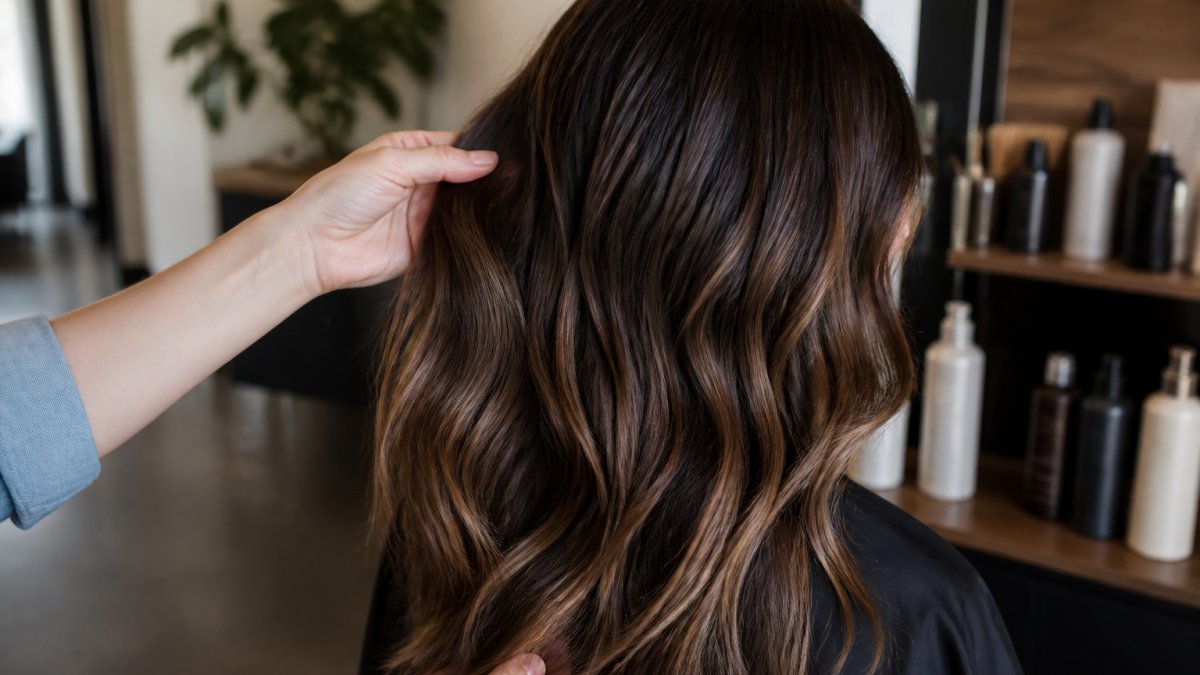
Dimensional color layers highlights, lowlights, and toning to create depth, movement, and light reflection rather than a single flat shade. Brown hair carries more natural pigment than blonde, so it responds with richer contrast and a more believable finish.
Flat color absorbs light evenly, reading as dull and growing out with a visible line. Multi-tonal color breaks that surface up: strands of different lightness catch light at different angles, so hair appears to move even when still.
The Difference Between Flat Color and Multi-Tonal Color
Flat color applies one formula from root to end. Multi-tonal color uses several shades placed deliberately, usually a base, a highlight, and a lowlight, sealed with a gloss, for contrast and depth.
For brunettes, that contrast is the point: a caramel highlight against chocolate brown creates brightness where light hits, while a deeper lowlight underneath adds shadow, so the color looks like it grew that way.
How to Add Dimension to Dark Brown Hair: Techniques That Create Depth
Adding dimension to dark brown hair means lifting selected strands a few levels, then blending them back into the base so no line of demarcation shows. The most reliable methods are foil highlights, hand-painted balayage, lowlights, root melting, and gloss toning, most salon transformations combine two or three.
Lowlights are the underused half of the equation. A darker shade beneath the surface adds shadow that makes lighter pieces pop; without them, highlights on dark brown hair can look stripey and one-dimensional.
Root Melting and Gloss Toning for Seamless Transitions
Root melting blends the base color into the highlighted mid-lengths so the transition is gradual rather than abrupt. Gloss toning follows: a demi-permanent color over the whole head to unify every tone and add shine. Together they make dimensional brunette color look seamless instead of freshly foiled.
A gloss fades gradually over several weeks, softening brassiness and refreshing light reflection without a full re-color.
Brunette Balayage: Hand-Painted Color for Natural Movement
Brunette balayage is a freehand technique where the stylist paints lightener onto the surface of the hair, sweeping downward for a soft, graduated transition from darker roots to lighter ends. Because placement follows the natural fall of the hair, it grows out with a diffused edge rather than a hard line, the go-to method for low-maintenance brunette hair color.
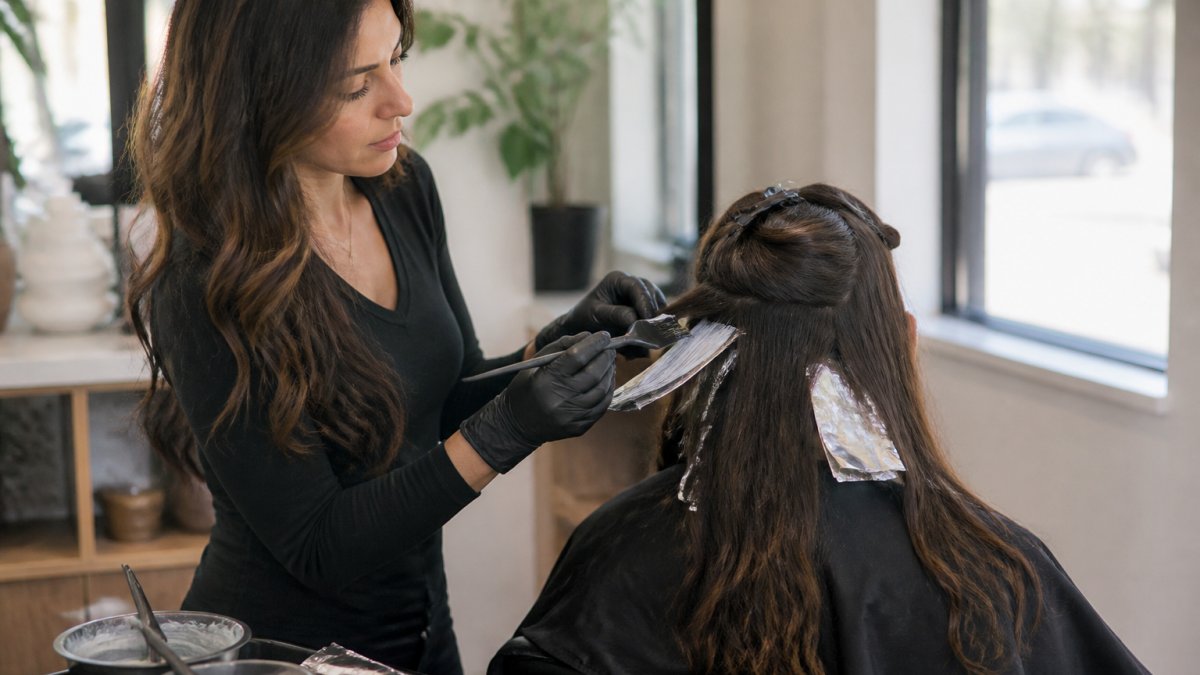
The technique rewards a colorist who reads how the hair moves: placement near the face brightens the complexion, mid-length placement adds movement, and untouched roots keep regrowth soft for months.
Balayage vs. Foil Highlights vs. Babylights: Choosing the Right Technique
Most brunettes do not need to pick one method, the real question is which combination produces the result you want at the grow-out you can live with. Here is how the main techniques compare on schedule and budget.
| Technique | Visual Result | Best Starting Hair | Typical Chair Time | Grow-Out | Refresh Cadence |
|---|---|---|---|---|---|
| Balayage | Soft, diffused, sun-kissed | Medium to dark brown, virgin or lightly colored | 3-4 hours | Diffused, no hard line | 3-4 months |
| Foil highlights | Brighter, more uniform, precise placement | Any brown, including previously colored | 2.5-4 hours | Visible regrowth line | 6-8 weeks |
| Babylights | Fine, dense, natural-looking brightness | Medium brown, fine to medium texture | 3-5 hours | Soft but more frequent touch-ups | 8-10 weeks |
| Lowlights | Depth, shadow, contrast under the surface | Over-highlighted or brassy brown | 1-2 hours (often added to another service) | Blends into base | 3-4 months |
| Root melting | Seamless base-to-highlight transition | Any brown with existing highlights | 30-60 minutes (add-on) | Very soft | 3-4 months |
| Gloss / toner | Shine, tone correction, brassiness control | Any brown | 20-40 minutes | Fades gradually | 6-10 weeks |
Practical rules of thumb:
- Balayage alone works best on medium brown or lighter hair. On very dark brown or black-brown hair it lifts too softly to show contrast, so stylists pair it with foils for brighter pieces.
- Foil highlights alone give the most control and brightest lift, but create a more defined regrowth line and more frequent visits.
- Babylights use very fine, densely packed sections, so the result reads as overall brightness rather than distinct streaks. They take longer to place and need a gloss refresh sooner because fine pieces fade faster.
What Balayage and Foils Actually Cost and How Long They Take
Dimensional color on brunettes is placement-heavy, so it takes longer and costs more than single-process color. Most salons price by technique, hair length, and density rather than a flat rate. As a general pattern:
- Balayage is usually the longest appointment because lightener is applied by hand, strand by strand.
- Foil highlights can be faster to place but use more product and often require a toner, adding time and cost.
- Babylights take the longest to place because sections are so fine, and typically require a gloss.
Because pricing varies widely by market and salon, ask for a quote at consultation based on your hair's length, density, and color history. A stylist who quotes a flat price over the phone without seeing your hair is guessing.
How Balayage Grows Out on Brunette Hair
Balayage's low-maintenance reputation comes from one design choice: the lightener never touches the root.
Most balayage clients return every three to four months for a partial balayage that re-brightens the face frame and mid-lengths, plus a gloss to unify tone.
Foil highlights behave differently: because the lightener starts closer to the root, regrowth shows as a visible line within six to eight weeks, the trade-off for the brighter, more uniform lift foils deliver.
Brunette Highlights: Caramel, Honey, and Chocolate Shades
Brunette highlights work best when the shade sits two to three levels above the base, close enough to look natural, far enough to show. Caramel brings warm golden-brown brightness to chocolate brown bases; honey is lighter and brighter, ideal for medium brown hair; chocolate and mocha lowlights add richness back when highlights look washed out.
Shade choice comes down to undertones: warm tones flatter golden or olive skin, cool ash tones flatter pink or cool skin, and copper brown sits in between, especially good on medium brunettes wanting something bolder.
Warm vs. Cool Undertones: Choosing the Right Highlight Shade
Match the highlight to the undertone already in the hair, then push it slightly. Naturally warm brown hair looks best with caramel, honey, or copper brown; cool or ashy brown looks best with cool ash, mocha, or a bronde blend that keeps the tone neutral.
Fighting your natural undertone is the most common mistake. Warm highlights on cool hair turn brassy within weeks; cool highlights on warm hair can look gray and flat.
Low-Maintenance Brunette Hair Color: Lived-In Results That Last
Low-maintenance brunette hair color is built at the consultation, not maintained by the client. The techniques that grow out gracefully, balayage, root melting, and soft face-framing brightness, all leave the root area darker than the mid-lengths, and that single decision stretches a color appointment from weeks to months.
At Sunbeam Hair Studio, we plan every dimensional color around how it will look in month three, not just day one, choosing placement that keeps regrowth soft and scheduling a gloss refresh rather than a full re-color when the tone needs a lift.
What "Low Maintenance" Actually Means by Technique
Low maintenance is not one thing, it depends on which technique you chose and how close the result sits to your natural color. Here is what each approach asks of you between appointments.
| Technique | Typical Refresh Interval | What the Refresh Involves | At-Home Effort |
|---|---|---|---|
| Balayage | 3-4 months | Partial re-paint of face frame and mid-lengths, plus gloss | Low |
| Foil highlights | 6-8 weeks | Full or partial foil re-do, plus toner | Moderate |
| Babylights | 8-10 weeks | Fine foil touch-up, plus gloss | Moderate |
| Lowlights only | 3-4 months | Quick re-application to blend regrowth | Low |
| Root melting + gloss | 6-10 weeks for gloss | Gloss refresh only; root melt as needed | Low |
The pattern is consistent: the further the lightener stays from your root, the longer you can go between appointments. Balayage and root-melted color are the most forgiving for a busy schedule; a full foil set with a bright root-to-tip lift is the least.
The At-Home Routine That Protects Dimensional Color
Lightened strands lose moisture faster than the surrounding base color, so the goal at home is to slow fading and keep lightened pieces strong. A routine most colorists recommend:
- Wash less often. Every wash strips tone; two or three washes a week measurably extends a gloss.
- Use a sulfate-free, color-safe shampoo. Sulfates lift the cuticle and accelerate fade, especially on warm caramel and honey tones prone to brassiness.
- Add a weekly bond-building or moisturizing mask. Lightened brunette strands need both protein and moisture, but protein overload makes hair brittle, so alternate rather than using a bond treatment every wash.
What You Should Not Try to Do at Home
Some maintenance is genuinely DIY-friendly. Some is not, and attempting it is how brunettes end up with patchy or brassy results that cost more to fix than the original service.
Safe to do at home:
- Color-safe shampoo and conditioner
- Weekly masks and leave-in treatments
- Heat protection
Not safe to do at home:
- Lightening or re-highlighting your own hair. Sectioning the back of your head accurately is nearly impossible alone, and overlapping lightener on already-lightened strands causes breakage.
- Applying a gloss or toner. Professional toners are mixed to your porosity and tone; an at-home gloss can shift the whole result.
- Correcting brassiness with box dye. Layering more pigment over dimensional color flattens it and can push the tone the wrong way.
When to Book a Gloss Versus a Full Appointment
A gloss is the cheapest, fastest way to refresh dimensional brunette color: it adds shine, neutralizes unwanted warmth, and unifies tones without lifting or depositing permanent color. Most clients can stretch a gloss to every six to ten weeks.
Book a full appointment when:
- Your regrowth line has become visible enough to bother you
- The lighter pieces have faded to a point where the contrast is gone
- You want to go lighter or shift the tone
Book a gloss only when:
- The color is still where you want it but looks dull or slightly warm
- You have an event coming up and want a shine boost
- You are between full appointments and want to extend the result
That distinction is the biggest cost saver in dimensional brunette color: clients who gloss between full appointments often go six months or more between major services, while those who skip it book a full re-do sooner because the tone has drifted.
The Consultation and Color-History Check: Planning Your Transformation
A proper consultation covers three things: your hair's color history, its current condition, and the result you actually want.
Bring photos, but bring them honestly. A photo of hair three shades lighter than yours is a conversation starter, not a promise.
This is also the moment to talk timing and budget openly. Dimensional color on brunettes takes longer than single-process color because of the placement work, and pricing at Sunbeam Hair Studio depends on the technique, hair length, and any treatments added.
Hair Health and Lightening Limits: What Your Brunette Hair Can Handle
Brunette hair can typically be lifted two to four levels in a single session before damage risk climbs sharply.
Virgin hair gives a colorist far more room than color-treated hair. If your hair has been lightened before, the lightener must travel through already-processed strands, weakening them further.
Understating the lightening limit is not caution, it is craft.
Dimensional color on brunettes is a planning problem more than a mixing problem.
Frequently Asked Questions
How do you add dimension to dark brown hair without making it look brassy?
The key is choosing the right lightener and toner for your undertones. A stylist will assess your hair's natural warmth and select a demi-permanent gloss or toner that neutralizes unwanted orange or yellow. Techniques like root melting and hand-painted balayage keep the color blended, so regrowth looks soft rather than stripey. Regular gloss toning every 6 to 8 weeks maintains the cool or warm tone you want.
Is brunette balayage better than traditional foil highlights?
It depends on the look you want. Balayage is hand-painted, so it grows out softly and needs fewer salon visits, making it ideal for low-maintenance brunette hair color. Foil highlights give more brightness and control, which suits face-framing or all-over lift. Many stylists combine both: foils for brightness near the face and balayage for a seamless transition through the lengths.
How often should dimensional brunette color be refreshed?
Most clients return every 8 to 12 weeks for a gloss or toner refresh, and every 12 to 16 weeks for a full highlight or balayage appointment. Lived-in color techniques extend that window because regrowth blends naturally. If you use demi-permanent color, expect a softer fade; permanent lightener may need more frequent toning to stay fresh.
What is the difference between highlights and lowlights for brunettes?
Highlights lift sections of hair to a lighter shade, adding brightness and light reflection. Lowlights do the opposite: they darken sections to create contrast and depth, especially in hair that has faded or turned too light. Using both together builds multi-tonal color that looks natural and gives movement. A stylist can place lowlights strategically to break up solid color.
Can I get dimensional color on virgin dark brown hair?
Yes. Virgin hair responds well to lightener because it has no previous color buildup. A stylist can lift selected strands to caramel, honey, or chocolate tones and then tone them for a seamless blend. Starting with virgin hair also means fewer surprises during the lightening process, and the final result often looks healthier and shinier.
How do I maintain dimensional brunette hair color at home?
Use a sulfate-free shampoo and conditioner made for color-treated hair to slow fading. Wash with cool water and limit heat styling. A weekly hydrating mask keeps lightened strands strong. Between salon visits, a color-depositing gloss or toning shampoo can refresh tone. Always ask your stylist for a personalized home-care routine based on your formula.