 how-to
How to Fix Brassy Balayage Color: A 2026 Guide
Table of Contents
- Why Balayage Turns Brassy and How to Spot It
- What Color Cancels Out Brassy Tones?
- Purple Shampoo for Balayage: When and How to Use It
- Blue Shampoo for Brassy Brunette Hair
- Step-by-Step At-Home Correction (With Safety Limits)
- When to See a Stylist Instead of DIY
- How to Maintain Balayage Color Between Salon Visits
- Conclusion
- Frequently Asked Questions
Last Updated: October 12, 2026
Why Balayage Turns Brassy and How to Spot It
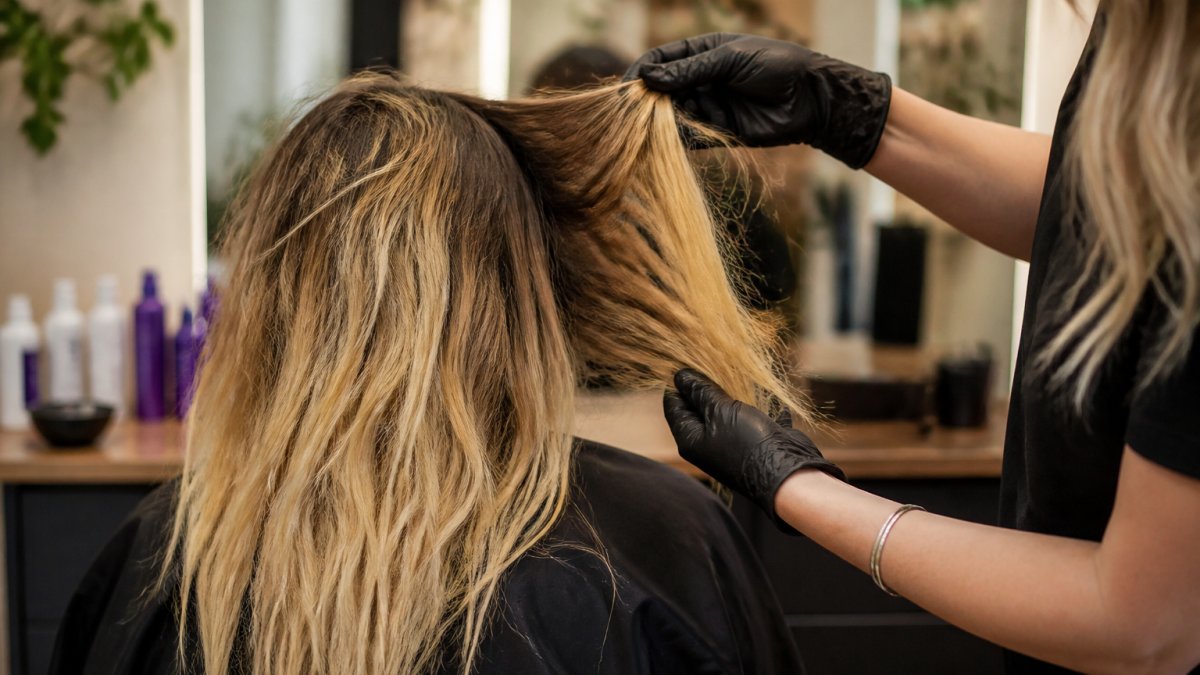
Brassy balayage happens when the lightener lifts your natural pigment but leaves warm undertones behind, and those warm tones show through as yellow, orange, or copper. This guide from Sunbeam Hair Studio covers how to fix brassy balayage color at home, when to stop and call a stylist, and how to keep the cool tone you paid for.
Why does it happen so fast? Oxygen and sun exposure oxidize the color, and hard water minerals build up on the strand. Both push warm tones to the surface within weeks.
U.S. Geological Survey information on hard water and mineral content
Causes Beyond Product Choice
Most people blame their shampoo. The real culprits are usually:
- Under-lifted sections where the lightener did not stay on long enough
- Hard water minerals coating the strand and dulling the tone
- Sun and heat styling, which speed up oxidation
- Skipped toners after the lightening service
- Swimming pools, where chlorine reacts with color-treated hair
Identifying Yellow, Orange, and Copper Tones
The visible tone tells you which correction to use. Check your hair in daylight, not bathroom lighting.
- Yellow tones mean the hair lifted to a pale stage. Purple shampoo handles this.
- Orange tones mean the hair stopped mid-lift. Blue shampoo is the match.
- Copper tones mean dark hair lifted only slightly. This needs a real toner or a pro.
What Color Cancels Out Brassy Tones?
The color that cancels out brassy tones sits opposite warm shades on the color wheel: purple neutralizes yellow, and blue neutralizes orange. That is the whole principle behind every purple and blue product on the shelf.
Here is the quick match:
| Visible Tone | Canceling Color | Best Product |
|---|---|---|
| Yellow | Purple | Purple shampoo or mask |
| Orange | Blue | Blue shampoo |
| Copper | Blue-green | Pro toner or salon visit |
Purple Shampoo for Balayage: When and How to Use It
Purple shampoo for balayage works best as upkeep, not as a rescue. It deposits violet pigment that cools yellow tones on already-light sections.
Use it like this:
- Apply to damp hair, focusing on the lightest pieces
- Leave on 3-5 minutes the first time, then check
- Rinse well and follow with a hydrating mask
- Repeat every other wash, not daily
Most people overuse it. Purple shampoo is drying, and daily use turns pale blonde into a flat, ashy gray. Two or three times a week is plenty for most hair.
Blue Shampoo for Brassy Brunette Hair
Blue shampoo for brassy brunette hair targets orange and copper, which is what most brunettes actually see. If your balayage was built on dark hair, this is your tool.
A few rules keep it safe:
- Use it once a week at most
- Keep it off your ends, which absorb pigment fastest
- Watch for green or teal casts on very light pieces
- Pair it with a deep conditioner
Step-by-Step At-Home Correction (With Safety Limits)
At-home correction can work if you stay inside two hard limits: tone only, never lift, and stop the moment you see the shift you want. Everything below assumes your hair is healthy enough to tone. If it is not, skip to the damage check first.
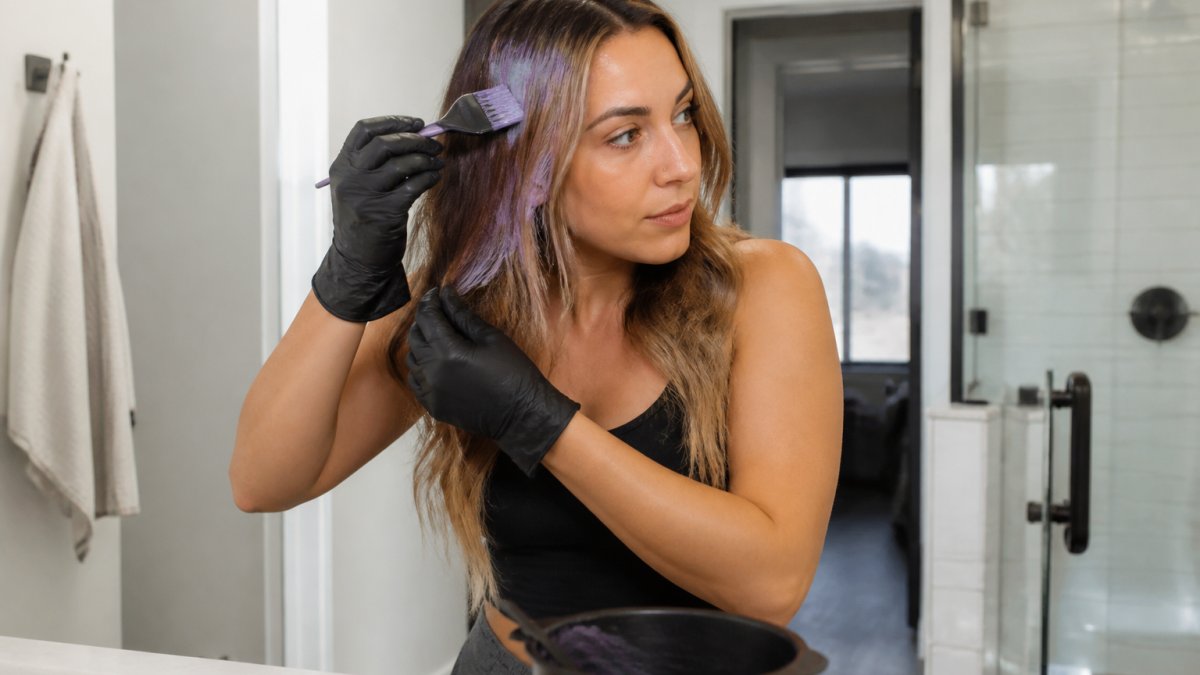
Total time: 30-45 minutes, including the strand test Difficulty: Beginner to intermediate What you need: toning shampoo or a deposit-only toner, gloves, a tint brush or applicator bottle, clips, a timer, a bond-building or hydrating mask
Step 0: The Damage and Porosity Check
Before any product touches your hair, run two quick tests.
- Wet stretch test: take one wet strand and gently pull. Healthy hair stretches and springs back. Hair that snaps or feels gummy is compromised, do not tone it. Book a stylist.
- Porosity check: drop a clean strand in a glass of water. If it sinks quickly, your hair is highly porous and will grab pigment fast and unevenly. Cut your processing time roughly in half and watch it closely.
High-porosity ends absorb toner much faster than mid-lengths. That is why the same product can leave one section perfect and another section gray or teal.
Step 1: The Strand Test (Do Not Skip This)
Apply your chosen product to one hidden section, behind the ear or at the nape, using the full intended time. Rinse, dry, and look at it in daylight. If the tone is right, proceed. If it went gray, green, or too cool, dilute the product with conditioner next time or shorten the time. Never test on the most visible section of your hair.
Step 2: Application
- Start on dry, unwashed hair. Natural oils give the scalp some protection.
- Section into four parts and clip them up so you can work cleanly.
- Apply from mid-length to ends first. Roots process faster from body heat, so they go last.
- Set a timer. Check every 3 minutes after the first 5. Do not walk away.
- Stop early if the tone shifts too cool. You can always add more; you cannot take it back.
Step 3: Rinsing and Aftercare
Rinse with cool water until it runs clear. Then apply a bond-building or hydrating mask and leave it on for 10 minutes. Skip heat styling for 48 hours, your cuticle is still open and porous, so heat pulls the tone right back out.
How Long the Result Lasts
Set realistic expectations. A toning shampoo or deposit-only toner typically fades within 4-8 washes, and faster if you wash daily, use hot water, or spend time in the sun. A salon gloss usually holds 3-4 weeks. That is why at-home toners are maintenance, not a permanent fix, plan to repeat every 1-2 weeks, and book a salon gloss every 6-8 weeks to reset the tone.
When to See a Stylist Instead of DIY
Call a stylist when the brass sits in the mid-lengths, when your hair feels gummy or stretchy, or when two box attempts have already failed. Home toners sit on the surface; they cannot fix under-lifted sections.
Damage is the bigger warning sign. If your hair snaps when wet, stop. Lightened hair that is already compromised will not survive another round of chemicals.
At Sunbeam Hair Studio, our stylists start every correction with an in-depth consultation, checking lift level, porosity, and tone before touching a bowl.
How to Maintain Balayage Color Between Salon Visits
How to maintain balayage color comes down to four habits: wash less, cool the water, protect from heat, and use the right toning product on a schedule.
- Wash two to three times a week with a sulfate-free shampoo
- Use purple or blue shampoo every other wash, alternating with a hydrating one
- Rinse with cool water to keep the cuticle closed
- Apply heat protectant before any hot tool
- Book a gloss or toner refresh every 6-8 weeks
A gloss takes minutes at the salon and resets the tone without re-lightening. It is the cheapest way to stretch a balayage between full appointments.
Conclusion
Brassy balayage is a maintenance problem more than a color problem, and the fix depends on matching your visible tone to the right product. Purple cools yellow, blue cools orange, and copper usually needs a pro.
If your hair is damaged, uneven, or already been through two failed box attempts, stop guessing. At Sunbeam Hair Studio, we offer in-depth consultations, personalized dimensional color, and a low-maintenance result built to last. Our team is certified in transformative color techniques, and our Louisville studio runs on sustainable practices, including Green Circle Salon waste diversion.
Book a session with Sunbeam Hair Studio and get a color result that stays cool between visits.
Frequently Asked Questions
What color cancels out brassy tones?
Purple cancels yellow, and blue cancels orange or copper. For brassy balayage, the right choice depends on the visible tone. If your highlights look yellow, a purple shampoo or toner helps. If they lean orange or copper, especially on brunette hair, a blue-based product works better. Using the wrong color can leave a muddy result, so always check your undertone in natural light before applying anything.
Should I use purple or blue shampoo for brassy balayage?
Purple shampoo for balayage is best when you see yellow tones, which is common on lighter blonde pieces. Blue shampoo for brassy brunette hair targets orange and copper tones that show up on darker bases. If your balayage has both yellow and orange, alternate between the two or choose a purple-blue blend. Start with once a week and adjust based on how your color responds.
Can a toner fix brassy balayage?
A toner can neutralize unwanted warmth, but it does not lighten hair. If your balayage is brassy because it was lifted to a yellow or orange stage, a toner with the right base (ash, beige, or neutral) can cool it down. Results typically last two to four weeks with proper aftercare. For deeper correction, such as uneven patches or overly warm sections, a stylist may need to re-lighten and tone.
When should I see a colorist to fix brassy balayage?
See a colorist if your hair feels dry, brittle, or has uneven patches after lightening. Also book a salon visit if at-home toners and shampoos are not giving you the cool result you want, or if you are unsure which tone to target. A professional can assess your hair condition and choose a correction method that avoids further damage. In the meantime, use a deep conditioning mask weekly.