 blog
How to Pick the Best Blonde Hair Color for Fair Skin
Last Updated: November 2, 2026
Quick Summary
There is no single best blonde hair color for fair skin; the right shade depends on your undertone and natural contrast. Cool undertones suit ash, platinum, beige, and sand blonde, while warm undertones take golden, honey, and caramel blonde. Neutral undertones can wear both, matched to your contrast.
- Fair skin is highly reflective, so it picks up whatever tone sits next to it.
- Use the vein, jewelry, white-paper, and sun tests to identify your undertone at home.
- Platinum works best on cool undertones with high natural contrast and strong hair.
- Dark brown hair usually needs two or more lifting sessions to reach platinum.
- Cool shades fade toward gray, so upkeep focuses on preserving depth, not fighting brass.
Table of Contents
- Why Fair Skin Needs a Deliberate Blonde Shade
- How to Choose Blonde Hair Color by Skin Tone
- Blonde Hair Colors for Cool Undertones
- Blonde Hair Colors for Warm Undertones
- Platinum Blonde for Fair Skin: Who It Works On and What It Costs You
- Neutral Undertones and the Natural-Contrast Rule
- Starting Color, Hair Condition, and How Light You Can Actually Go
- Keeping Your Blonde From Going Brassy: Upkeep by Shade
- Frequently Asked Questions
Why Fair Skin Needs a Deliberate Blonde Shade
There is no single best blonde hair color for fair skin. The right shade depends on your undertone, your natural contrast, and how light your starting color can safely go. Fair skin is a starting point, not an answer.
Fair skin is highly reflective. It picks up whatever tone sits next to it. Put a cool ash blonde against pink undertones and the skin looks flushed. Put a warm golden blonde against yellow undertones and the complexion turns sallow. That sensitivity is why shade selection matters more for light skin tones than for almost any other group.
The good news: once you know your undertone and your natural contrast, the field narrows fast. Below, we walk through how to choose blonde hair color by skin tone, shade by shade, with the upkeep each one demands.
The Two Things That Decide Everything: Undertone and Contrast
Undertone is the underlying hue of your skin, independent of how light or dark it is. It falls into three camps: cool, warm, and neutral.
Contrast is the difference between your skin, your eyes, and your natural hair color. Someone with dark brown hair and pale skin has high contrast. Someone with light brown hair and fair skin has low contrast.
These two variables do most of the work. How color analysis can transform your hair color shows how a professional pinpoints your personal palette from them. Get them right and the shade reads as natural. Get them wrong and even an expensive color looks off.
How to Choose Blonde Hair Color by Skin Tone
Choosing a blonde hair color by skin tone means matching the shade's temperature to your undertone first, then adjusting for contrast. Cool undertones take ash, platinum, and beige. Warm undertones take golden, honey, and caramel. Neutral undertones can wear both, usually in softer, blended forms.
The rule most guides get wrong is treating "fair skin" as one category. It isn't. Pink, rosy, yellow, and neutral undertones all sit under the fair-skin umbrella, and each one pulls toward a different family of shades. Redken's guidance on blonde shades for every skin tone draws the same line: cool blondes for cool undertones, warm blondes for warm undertones.
A Quick Self-Assessment You Can Do at Home
Try this before you book anything:
- The vein test. Look at the veins on your inner wrist in daylight. Blue or purple leans cool. Green leans warm. A mix leans neutral.
- The jewelry test. Silver flatters cool undertones. Gold flatters warm. Both working usually means neutral.
- The white-paper test. Hold a plain white sheet next to your bare face in natural light. If your skin looks pink beside it, you're cool. If it looks yellow or golden, you're warm.
- The sun test. If you burn quickly and rarely tan, that points cool. If you tan easily, that points warm.
Two out of four pointing the same way is a reliable signal. If the results conflict, you're likely neutral, and a consultation will settle it.
Blonde Hair Colors for Cool Undertones
Cool undertones suit ash blonde, platinum blonde, beige blonde, and sand blonde. These shades sit on the smoky, taupe side of the spectrum, with little to no gold in them.
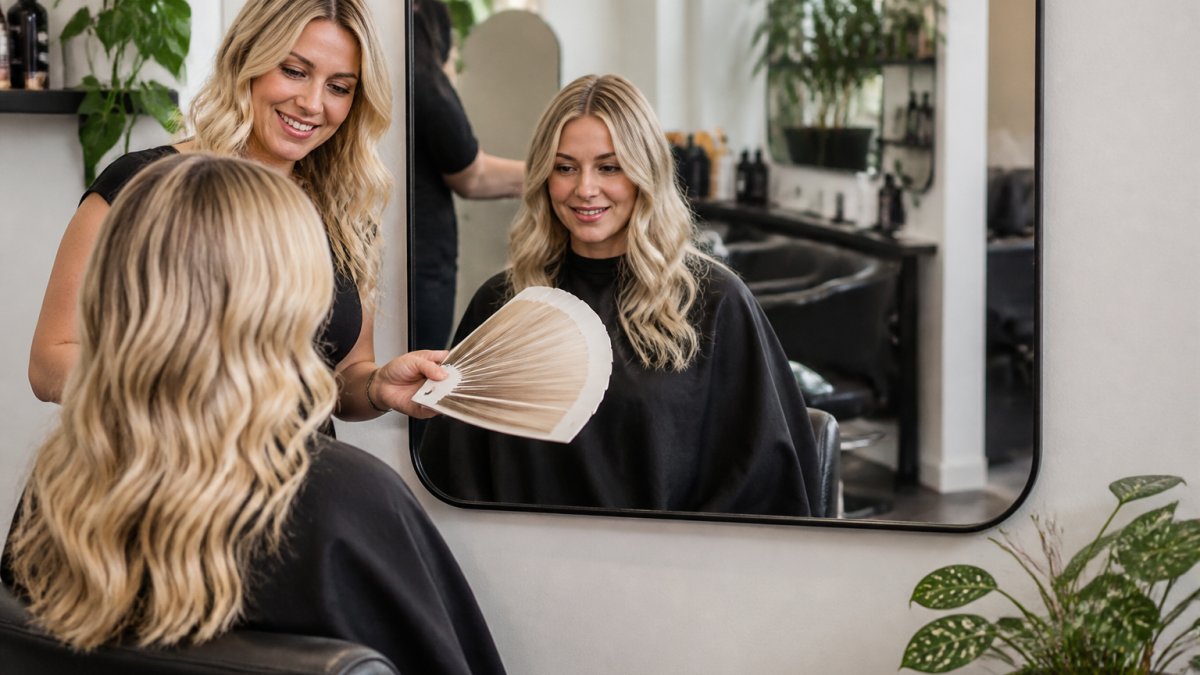
Ash blonde is the most neutral of the cool shades, with a gray-green cast rather than a blue one.
Beige blonde is ash blonde with a touch of warmth pulled back in. It is the shade to choose if ash feels too cold or too gray against your skin.
Sand blonde is a muted, dusty cool blonde that sits slightly deeper than beige.
Platinum blonde is the lightest and boldest cool shade, and the least forgiving. It works best on cool undertones with high natural contrast and strong hair.
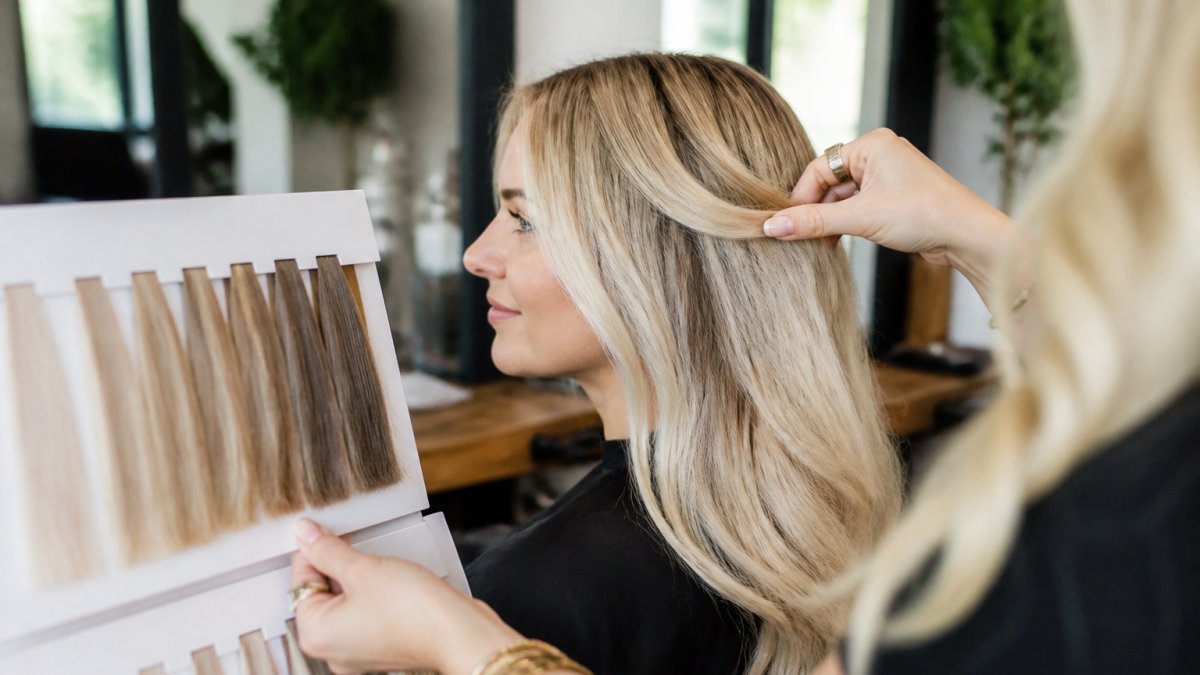
A practical way to choose among the four: hold a swatch of each next to your bare face in daylight and notice which one makes your skin look even rather than pink, gray, or sallow.
What most guides miss: cool shades fade toward gray, not yellow. That means your upkeep routine is about preserving depth, not fighting brass.
Blonde Hair Colors for Warm Undertones
Warm undertones take golden blonde, honey blonde, and caramel blonde. These shades carry visible gold, which harmonizes with yellow and golden skin rather than fighting it.
Golden blonde is the most natural-looking option for warm fair skin. Honey blonde adds a touch of depth without going dark. Caramel blonde works well for anyone with light brown hair who wants warmth without a full lift.
The common mistake here is going too cool to "balance" a yellow undertone. That backfires. Cool ash against warm skin creates a grayish cast that reads as dull rather than bright. Lean into the warmth instead.
Platinum Blonde for Fair Skin: Who It Works On and What It Costs You
Platinum blonde for fair skin works best on cool undertones with high natural contrast and strong hair. It is the highest-maintenance shade in this guide, and the one most likely to cause damage if rushed.
Platinum requires lifting to the lightest level, which means the hair goes through the most aggressive part of the lightening process. Fine or already-processed hair may not survive it in one session. A stylist should assess condition before promising the result.
Watch out: platinum on warm or neutral undertones can look washed out rather than striking, because the shade has no warmth to meet the skin's own.
Neutral Undertones and the Natural-Contrast Rule
Neutral undertones have the widest range. Neutral blonde, beige blonde, and soft honey all work, and the deciding factor shifts from undertone to contrast.
Here's the rule we use: match the shade's depth to your natural contrast. High contrast, meaning dark brown hair and pale skin, suits a stronger shade with visible dimension. Low contrast, meaning light brown hair and fair skin, suits a softer, blended shade that stays close to your natural depth.
Vogue's coverage of the skin-tone hair trend describes this low-contrast approach as the subtlest direction in color right now, and it's the one we recommend most often for neutral clients who want something they won't have to fight.
Starting Color, Hair Condition, and How Light You Can Actually Go
Your goal shade and your achievable shade are two different things. Starting color sets the floor. Hair condition sets the ceiling. Most disappointing blonde appointments come from skipping this step, so here is the realistic version most guides leave out.
Starting color sets the number of sessions. Stylists commonly measure natural depth on a scale from 1 (black) to 10 (lightest blonde).
- Dark brown hair (levels 3-4) usually needs two or more lifting sessions to reach platinum, with a rest period between them.
- Medium brown hair (levels 5-6) can often reach beige or honey in one long appointment, but platinum still takes two.
- Light brown or dark blonde hair (levels 7-8) can usually reach sand, beige, or honey in a single appointment.
- Previously colored hair adds a variable, because old color responds unevenly to lightener and can band or grab in patches.
Hair condition sets the ceiling. Lightener works by opening the cuticle and breaking down pigment, and it does not distinguish between pigment you want gone and the protein structure you want to keep.
The trade-off is real. Pushing to the lightest level in one session raises the risk of breakage, gumminess, and a result that looks bright but feels compromised. Two gentler sessions often produce a healthier final blonde than one aggressive session, even though it takes longer.
This is where at-home versus professional coloring splits sharply. A box kit cannot assess your starting level or your hair's tolerance, and it applies one formula to every strand.
If you are ready to move from choosing a shade to booking one, our guide to booking a dimensional color appointment walks through the process step by step. You can also review our balayage and dimensional color services to see what fits your goal.
Keeping Your Blonde From Going Brassy: Upkeep by Shade
Upkeep differs by shade family, and planning for it before you color is the difference between a result you love and one you resent by week six.
| Shade family | Main risk | Upkeep focus |
|---|---|---|
| Ash and platinum | Fading to gray, dryness | Toning appointments, moisture treatments |
| Beige and sand | Losing depth | Gentle cleansing, occasional gloss |
| Golden and honey | Fading warm, dulling | Color-safe wash, regular refresh |
| Caramel | Regrowth showing at the root | Root touch-ups, blended grow-out |
Cool shades often benefit from toning to stay cool. Warm shades benefit from protection against dulling. Both benefit from a color-safe regimen. Our guide to color safe shampoo and conditioner explains which formulas protect a fresh blonde, and if brassiness has already set in, how to fix brassy balayage color covers diagnosis and correction.
Consider booking a toning appointment before brassiness appears, since waiting can mean living with it for a while.
Sunbeam Hair Studio is a Gold Level member of the Colorado Green Business Network and a Green Circle Salon partner, which diverts 93% of waste. The salon offers in-depth hair consultations with expert stylists to help you understand what your starting color and condition can reach.
Frequently Asked Questions
Does blonde hair look better on pale skin?
Blonde can look excellent on pale skin, but the shade has to match your undertone and the contrast you want. Cool undertones usually suit ash, beige, sand, and platinum blondes, while warm undertones sit better with golden, honey, and caramel. A single universal blonde does not exist for fair skin, which is why a stylist looks at your skin, natural hair color, and eyes before mixing anything. The right blonde brightens the complexion; the wrong one can wash it out or make redness more obvious.
Which blonde shade is best for fair skin with cool undertones?
Cool undertones pair best with cool blonde hair colors. Ash blonde, beige blonde, sand blonde, and platinum blonde all sit on the cool side and tend to harmonize with pink, rosy, or blue undertones. Beige and sand are the softer, lower-maintenance options because they need less toning between appointments. Platinum gives the strongest result but requires the most lightening and the most frequent salon visits to keep it from turning yellow.
Can people with fair skin wear platinum blonde?
Yes, but it depends on your starting color and hair condition. Platinum blonde for fair skin works best when your natural hair is already light or medium, because dark brown hair has to be lightened in stages to protect the strand. Expect a multi-session process and regular toning appointments to keep the shade from going brassy. If your hair is fragile or previously colored, a stylist may recommend a softer beige or sand blonde first.
How do you choose a blonde hair color that suits your skin undertone?
Start with undertone, then add contrast. Check the veins on your inner wrist and how your skin reacts to gold versus silver jewelry: blue veins and silver favor cool blondes, green veins and gold favor warm blondes, and a mix points to neutral. Next, decide how much contrast you want against your natural hair color. A stylist can confirm both in a consultation and mix a shade that flatters your complexion instead of fighting it.
Fair skin doesn't limit your options, but it does reward precision. The clients who love their blonde longest are the ones who matched undertone and contrast before they picked a shade, and who planned their upkeep before the first appointment. Get started with Sunbeam Hair Studio and book a consultation that starts with your skin, not a trend.