 how-to
How to Grow Out Balayage Gracefully: 7 Steps
Quick Summary
To grow out balayage gracefully, blend the regrowth with sheer root smudges and gloss rather than opaque root touch-ups. Balayage is hand-painted in a soft pattern, so the lightened look fades gradually without a hard stripe of regrowth. Plan visits in stages, starting around weeks 6 to 12 when the demarcation line first shows.
- Balayage's soft, hand-painted pattern lets a lightened look fade without showing a stripe of regrowth.
- Around weeks 6 to 12, the demarcation line becomes noticeable, especially from a dark base.
- A root smudge is a sheer, temporary shade that blurs the line, unlike an opaque root touch-up.
- Longer hair hides roots better, so the same growth looks softer on shoulder-length hair than on short cuts.
- Avoid strong at-home lighteners on grown-out roots, as they can cause uneven color and breakage.
Table of Contents
- What Grown-Out Balayage Looks Like and How Long It Takes
- Factors That Change Your Grow-Out Timeline
- How to Blend Balayage Roots as They Grow
- Root Smudge and Toner: Managing Color Demarcation
- Scheduling Trims: The Balayage Grow-Out Haircut
- At-Home Care That Keeps Grow-Out Looking Intentional
- Booking Your Next Appointment to Finish the Transition
- Frequently Asked Questions
What Grown-Out Balayage Looks Like and How Long It Takes
Last Updated: November 1, 2026
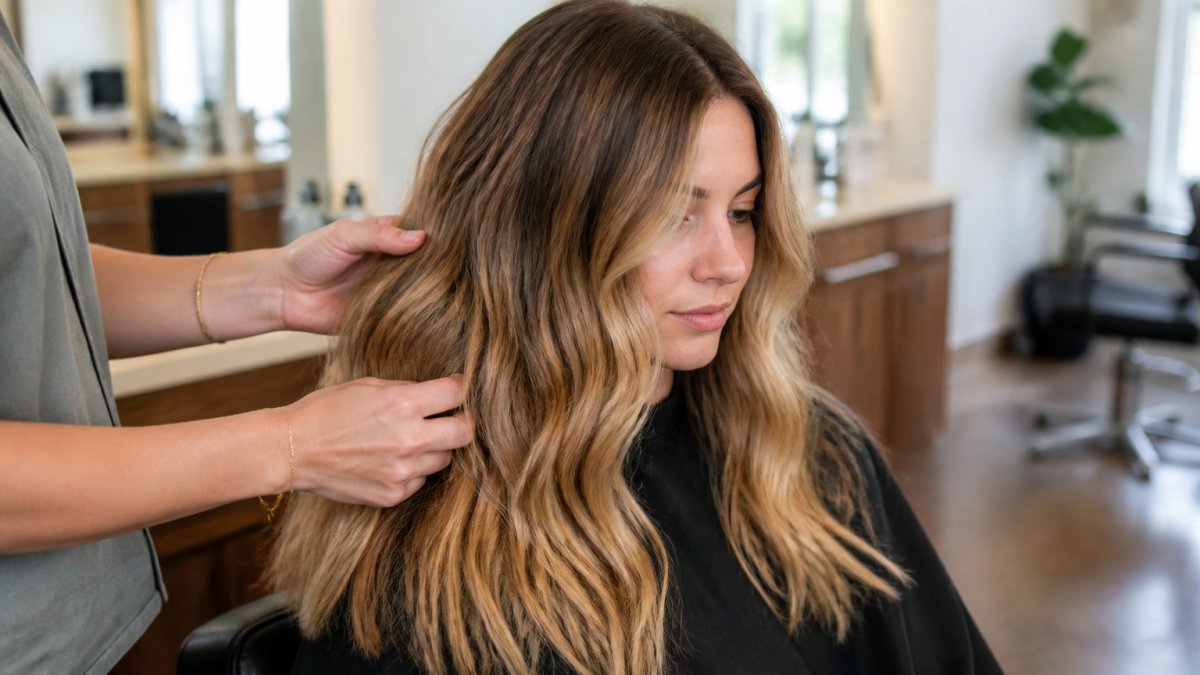
Balayage is designed to grow out, and that is its biggest advantage. Unlike traditional foil highlights, which create a hard line near the scalp, balayage is hand-painted in a soft, sweeping pattern. Balayage's soft, hand-painted pattern is what lets a lightened look fade slowly rather than showing a stripe of regrowth.
Timing varies widely from person to person, and some people stretch appointments longer than others.
A grown-out balayage usually shows three things:
- A soft band of natural-colored roots near the scalp
- Lighter, brighter ends that still look intentional
- A gradual blend between the two, without a harsh line
Factors That Change Your Grow-Out Timeline
Your grow-out timeline depends on your starting color, how dark your natural base is, and how much lightener was used. A client going from dark brown to bright blonde will show more contrast than someone with a softer, lighter-root blend.
Hair length matters too. Longer hair hides roots better, so the same root growth looks softer on shoulder-length hair than on a short cut.
Your hair's texture and condition also play a role. Coarse, dense hair often grows out with less visible contrast than fine hair. Damaged or porous ends may take color differently, which can change how the blend looks over time.
How to Blend Balayage Roots as They Grow
Blending is the key to a graceful grow-out, and it works best when you treat it as a staged plan rather than a single salon fix. The goal at every stage is the same: soften the transition between your natural root and your lightened lengths so the regrowth reads as intentional dimension, not neglect.
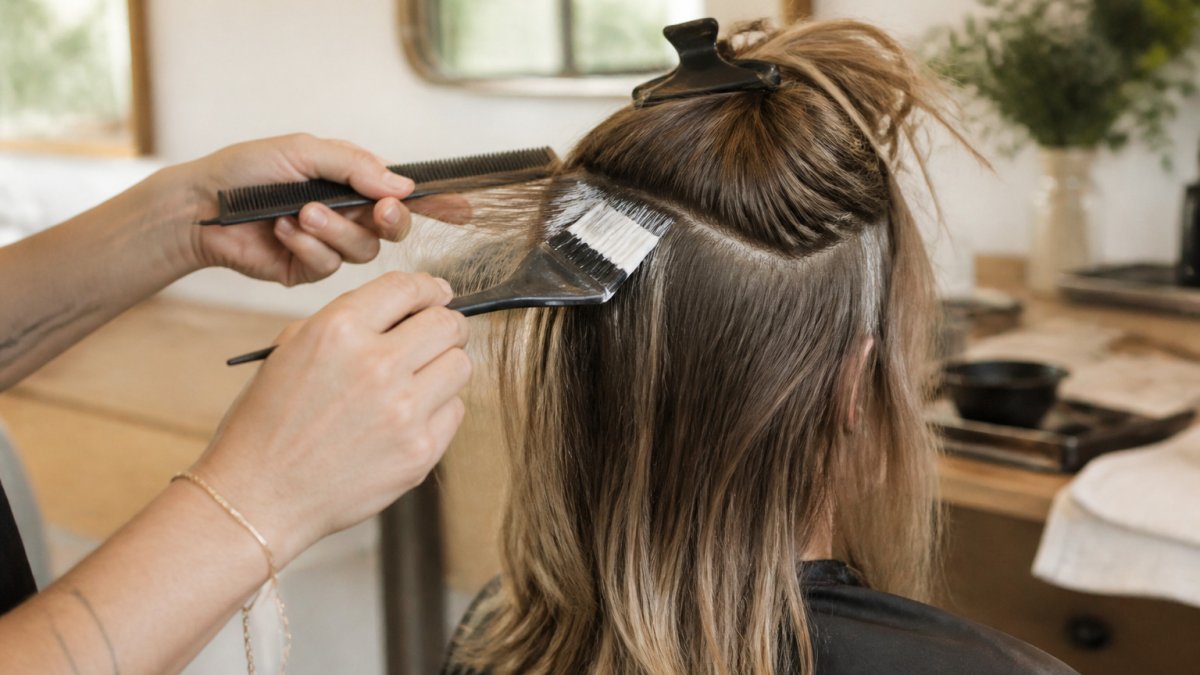
A staged grow-out plan
Stage 1, Weeks 0 to 6: protect the blend. Your color is still close to the salon result. Focus on tone: use a color-safe, sulfate-free wash and a weekly mask, and keep heat styling moderate. No salon color needed yet. If your ends start to look brassy before your roots are visible, a quick gloss at the bowl is the lowest-commitment refresh.
Stage 2, Weeks 6 to 12: soften the line. This is when the demarcation line first becomes noticeable, especially if you started from a dark base. Ask your colorist about a root smudge, a sheer, demi-permanent shade that softens the line between new growth and lightened lengths. You can see the full range of balayage and dimensional color services offered for maintaining a blended look. It blurs the line without lightening the root, so you keep your natural color while the transition looks softer. A gloss over the mid-lengths and ends at the same visit keeps the blonde from going warm.
Stage 3, Weeks 12 to 20: decide your direction. You now have a clear choice: keep blending (another root smudge plus a partial highlight through the face frame), begin transitioning back to natural color with lowlights or a deeper gloss, or lean into a shadow-root look by letting the natural base stay longer. Bring photos of the directions you are considering so your colorist can match the technique to your goal. If you are still deciding who to trust with the blend, see how to choose a balayage stylist.
Stage 4, Beyond 20 weeks: maintain or transition. If you are keeping the balayage, a partial refresh every few months is a common pattern. If you are growing it out entirely, switch to lowlights and glosses that gradually pull the lightened lengths closer to your natural shade, and let trims remove the brightest ends over time.
Match the technique to your starting color and placement
The same root smudge reads differently depending on where your balayage was painted. If your lightener starts close to the scalp, regrowth shows sooner and a root smudge is essential by week eight. If your balayage was painted with a deeper shadow root and face-frame brightness, you have more runway, the natural root already blends into the shadow, so you can stretch to 12 or 16 weeks. Dark-base clients often see more contrast and may benefit from an earlier root smudge.
Hair length changes the math too. On a short cut, a half-inch of root is a visible percentage of the whole style, so plan on earlier blending or a cut that keeps the shape soft. On shoulder-length or longer hair, the same growth is a smaller share of the silhouette and reads as a softer gradient.
Tip: Brush your roots with a little color-matched gloss or toner between visits to keep the transition looking even. Avoid harsh, heavy products on the roots, since they can make the line look more obvious.
Root Smudge and Toner: Managing Color Demarcation
Color demarcation is the visible line where new roots meet older, lighter hair. Managing it is the core of a graceful grow-out.
A toner or gloss can help keep brassy tones from showing as your color fades. Our guide on fixing brassy balayage color explains the causes and options in more detail. Ask your colorist which toner suits your base and lightened tones.
Watch out: Do not use strong at-home lighteners on grown-out roots. This can cause uneven color, dryness, or breakage, and it often makes the demarcation line worse.
Scheduling Trims: The Balayage Grow-Out Haircut
A trim keeps the shape fresh and helps the color look intentional. Trim timing during grow-out varies, and your stylist can advise on a schedule that fits your hair.
Ask for a cut that works with your grown-out color. Soft layers and a shape that blends into your natural root area often look more polished than a blunt line.
Here is a quick reference to what the article says about trims and care between visits.
| Item | Guidance | Note |
|---|---|---|
| Trim timing | Varies; ask your stylist | Keeps shape fresh and color intentional |
| Cut style | Soft layers | Blends into natural root area |
| Weekly deep conditioning | Once a week | Protects lightened ends |
| Washing water | Lukewarm, not hot | Helps preserve color |
| Split ends | Trim regularly | Keeps lengths healthy |
At-Home Care That Keeps Grow-Out Looking Intentional
Good home care can help protect lightened ends and keep color looking fresh between salon visits.
- Use a sulfate-free shampoo and a conditioner made for color-treated hair
- Wash with lukewarm water, not hot
- Apply a deep conditioning mask once a week
- Use heat protectant before styling with a flat iron or curling iron
- Trim split ends regularly to keep lengths healthy
Avoid DIY root touch-ups unless your colorist has shown you exactly how to do them. Mistakes can leave you with patchy color that is harder to fix than a natural grow-out.
Booking Your Next Appointment to Finish the Transition
When you are ready to finish the transition, the appointment you book matters more than how often you book. Walk in with a goal, such as keeping the blend, refreshing the blonde, or transitioning back to your natural color, and discuss the right service with your colorist.
Service options and what each one does
- Gloss or toner: A sheer, demi-permanent refresh that adjusts tone and adds shine without changing your base. Best for weeks 6 to 12 when the color looks dull but the root line is still soft. Lowest commitment and the easiest to repeat.
- Root smudge: A sheer shade painted over the new growth and melted downward to blur the demarcation line. Best when you want to keep your natural root but soften the transition. Typically paired with a gloss.
- Partial refresh: A limited highlight or balayage pass through the face frame and part line to reconnect the lightened pieces to the root. Best when you are keeping the balayage long-term and want to stretch time between full appointments.
- Lowlights: Deeper pieces woven through the lightened lengths to pull the overall color closer to your natural shade. The core move when you are transitioning back to natural color.
- Full correction: A multi-step service to fix banding, patchiness, or a hard line from a DIY attempt or a long stretch between visits. This is the service to book when the grow-out has gone wrong, not the one to book for routine maintenance.
Transitioning back to natural color
If your goal is to stop highlighting, the graceful path is gradual. A common pattern is to start with lowlights through the brightest sections, then follow with a gloss that pulls the whole head toward your natural tone, repeating every 8 to 12 weeks while trims remove the lightest ends. Root smudging can bridge the early stages so the new growth never looks like a hard band. Trying to go from bright balayage to natural brown in one appointment usually means a heavy, opaque color that looks flat and grows out with its own line, the opposite of graceful.
When to consult a colorist instead of waiting it out
Book a professional correction rather than another maintenance visit if you see any of these:
- A hard, horizontal band where the lightener stopped
- Patchy or uneven color from an at-home root touch-up
- Breakage, gummy ends, or stretchy hair when wet
- A root line that a gloss or smudge no longer softens
- More than one shade of difference between your root and your mid-lengths that you cannot blend with toning
Repeated bleaching over an already-lightened band is the most common way a grow-out turns into a correction, so when in doubt, book a consultation before you book a color service.
What to bring to the appointment
Bring photos of your current color in daylight, your goal look, and a note of every product and service your hair has had in the last year, including box dye. Ask your colorist to explain the plan in stages so you know what the next two or three appointments will do. You can book a session through our website to start your grow-out plan, and our team can help you decide whether to blend, tone, or fully transition back to your natural color. When you are ready, follow this step-by-step guide to booking a dimensional color appointment.
Frequently Asked Questions
How long does it take to grow out balayage?
Most balayage grows out gradually over about 3 to 6 months, though timing depends on how much lightener was used, your natural hair growth rate and how much color contrast you want to keep. Some clients choose to space appointments further apart, which can slow the transition. Booking a glossing or toner appointment in between can keep the lightened ends looking fresh while the roots gradually blend.
How can I blend my roots while growing out balayage?
Ask your colorist for a root smudge or soft root blend, which softens the line between your lightened sections and your natural color. Between salon visits, a gentle, color-safe approach works best: avoid harsh overall color that creates a stripe, and use a toner or gloss to even out brassiness. Regular trims also remove the oldest, most visible lightened lengths.
Should I get a toner while growing out balayage?
A toner or gloss is often useful during grow-out because it neutralizes brassy tones in the lightened ends while the roots are still growing in. Toner timing varies with your hair and maintenance routine, so ask your stylist how often to refresh it. Using purple shampoo sparingly between appointments can help maintain the tone without drying out the hair.
Should I cut my hair while growing out balayage?
Yes, regular trims help. A grow-out haircut removes the oldest, most lightened ends and shapes the hair so the transition looks deliberate rather than uneven. Trim timing during grow-out varies, and a stylist can recommend a shape that works with the blended color.