 how-to
How to Choose a Balayage Stylist: A Practical Guide
Table of Contents
- Understanding What Makes a Great Balayage Stylist
- Evaluating Balayage Before and After Photos
- Essential Balayage Consultation Questions to Ask
- Assessing Hair Health and Damage Risk
- Balayage for Brunette Hair: Finding a Stylist Who Understands Your Needs
- Balayage Maintenance and Touch-Ups: What Your Stylist Should Explain
- Red Flags and Realistic Expectations
- Frequently Asked Questions
Last Updated: October 21, 2026
Understanding What Makes a Great Balayage Stylist
Finding the right balayage stylist is one of the most important decisions you'll make for your hair. A great stylist combines technical skill, artistic vision, and a deep understanding of how color behaves on different hair types.
The best balayage stylists don't just paint highlights. They study your texture, consider your face shape, and create a customized plan that looks intentional yet effortless. They know balayage is a freehand technique requiring years to master, placing color for maximum dimension and blending it so grow-out looks natural, not stripey.
Look for stylists who specialize in balayage rather than treating it as one service among many.
Evaluating Balayage Before and After Photos
Your stylist's portfolio is the closest thing to a test drive before committing to a balayage appointment.
Match hair type, not just color. Balayage behaves differently on fine versus thick, curly versus straight, short versus long hair.
Examine the transition zone. Zoom in where darker roots meet lighter pieces.
Look for grow-out photos. Ask for photos taken 8-12 weeks after the appointment.
Distinguish edited from unedited. Studio lighting, ring lights, and filters can make mediocre color look dimensional. Look for phone snapshots in natural daylight.
Check for consistency across clients. One stunning result could be a fluke. Scroll through at least 10-15 recent posts.
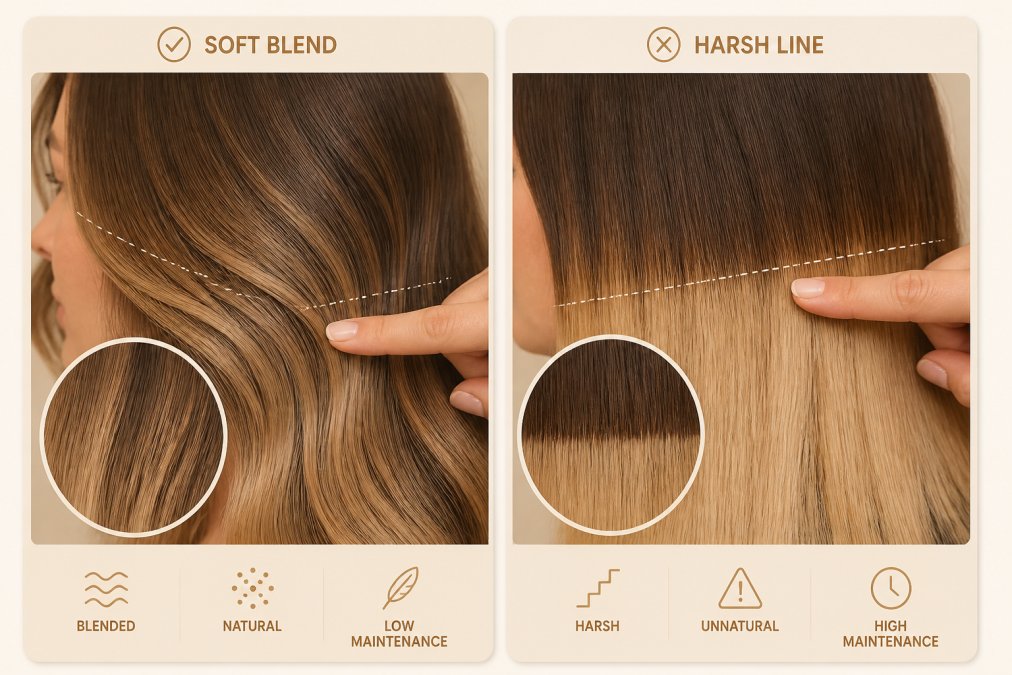
Red flags in a portfolio:
- All before photos show the same hair type or color
- Heavy filters or studio lighting on every image
- No grow-out or repeat-client photos
- Results that look overly uniform or stripey rather than hand-painted
- Comments disabled or negative comments deleted
A portfolio is a marketing tool, but it's also a record of technical skill.
Essential Balayage Consultation Questions to Ask
A consultation is your best opportunity to vet a stylist's expertise, communication style, and fit for your hair goals. The questions below help you assess four critical areas: technical training, experience with your hair type, consultation quality, and realistic expectations.
1. Training and technique
- Where did you receive your balayage training, and do you hold any advanced certifications? Look for specific academies, brands (e.g., L'Oréal, Redken, Wella), or continuing education courses, ongoing education keeps stylists current with techniques and color formulations.
- How many balayage clients do you see in a typical week? Frequency matters. A stylist who performs balayage daily will have more refined hand-painting skills than one who offers it occasionally.
- What lightening products and developers do you use, and why? The answer reveals whether they tailor their approach to hair health or use a one-size-fits-all formula. A thoughtful stylist explains how they choose between clay-based lighteners, cream lighteners, and developers based on hair condition.
- How do you stay updated on new balayage techniques? Look for trade shows, online education, or mentorship. Stagnant stylists may still use outdated methods.
2. Experience with your hair type and history
- Can you show me examples of your work on hair similar to mine, same starting color, texture, and length? This is non-negotiable. Fewer than three relevant examples means they may lack the specific experience you need.
- How do you adjust your technique for fine versus thick hair, or curly versus straight? Placement and product choice change dramatically across textures. A generic answer likely signals a lack of deep experience.
- What's your approach when a client has previous box dye or old highlights? The answer should cover color correction, strand testing, and possibly multiple sessions. Brushing off your hair history is a red flag.
- Have you worked with my natural level before? What challenges does it present? For dark brunettes, achieving visible dimension without brassiness is a common challenge. A skilled stylist will acknowledge the difficulty and explain their strategy.
3. Consultation quality and communication
- How do you determine where to place color based on face shape and skin tone? Listen for specifics, like highlighting around the face to draw attention to eyes or using cooler tones for fair skin. Vague answers suggest a lack of customization.
- What questions do you have for me about my lifestyle and maintenance preferences? A strong stylist asks how often you style your hair, how much time you'll spend on upkeep, and what you dislike about your current color. If they don't ask, they're not listening.
- Can you walk me through the entire process, step by step, including timing and what I'll feel and see? This reveals their organization and whether they have a clear plan, and gives you a chance to voice concerns.
- How do you handle a client who isn't happy with the result? The answer should include a reasonable adjustment policy. A stylist who guarantees perfection or dismisses the possibility of dissatisfaction may be unrealistic or difficult to work with.
4. Realistic expectations and aftercare
- What's the realistic maintenance schedule for the look I want, and what will each appointment cost? Ask for a range, not a single number. A stylist who downplays maintenance or cost sets you up for frustration.
- What at-home products do you recommend, and why? They should mention specific types (sulfate-free shampoo, purple shampoo, heat protectant) and explain how each supports the color. Generic advice like "use good products" is insufficient.
- What are the risks given my hair's condition, and how do you minimize them? A responsible stylist will discuss potential damage, breakage, and the importance of strand testing. If they promise zero damage, be skeptical.
- How long will the appointment take, and how many sessions might I need to reach my goal? Balayage on dark or previously colored hair often requires multiple sessions. A clear timeline helps you budget and plan.
Red flags during the consultation:
- They guarantee a specific result without assessing your hair
- They dismiss your concerns about damage or maintenance
- They pressure you to book multiple services or expensive treatments on the spot
- They can't show you relevant portfolio examples
- They don't ask about your hair history or lifestyle
- They promise platinum results on dark hair without discussing the process and risks
Use this checklist as a conversation guide, not an interrogation. A good stylist appreciates your preparation and reciprocates with transparency, answering thoroughly, asking thoughtful questions in return, and making you feel confident in their plan.
Assessing Hair Health and Damage Risk
Before committing to balayage, understand your hair's condition and what lightening will do to it. A responsible stylist assesses this honestly, even if it means recommending a different approach.
Ask your stylist to evaluate porosity, elasticity, and overall health. Previously lightened, chemically treated, or heat-damaged hair may not be ideal for balayage right now.
Lightening opens the hair cuticle to remove pigment (ncbi.nlm.nih.gov). If your hair is already compromised, aggressive lightening can cause breakage, brittleness, or excessive dryness.
Ask specifically about color correction if you've had previous color work. Coming from box dye or poorly done highlights may require corrective work before balayage, extra time and possibly multiple sessions. Knowing this upfront prevents surprises and clarifies the investment.
Balayage for Brunette Hair: Finding a Stylist Who Understands Your Needs
Balayage for brunette hair requires different expertise than on blonde or lighter hair. Brunettes need stylists who can create dimension and movement on darker bases without making hair look striped or unnatural.
The challenge is achieving visible lightness while keeping it believable.
Ask brunette-focused stylists about their approach to lived-in color, dimensional, but not obviously highlighted. It should look like your hair naturally caught the sun, which requires strategic placement and careful blending.
Inquire about their experience with different brunette shades. Dark brunette requires different techniques than medium or light brunette, the darker your starting hair, the more skill needed for visible dimension. A brunette specialist will have a portfolio full of examples on similar colors to yours.
Balayage Maintenance and Touch-Ups: What Your Stylist Should Explain
Understanding maintenance before you commit helps you make a realistic decision. Your stylist should clearly explain what upkeep looks like and what products you'll need at home.
Most balayage requires touch-ups every 8-12 weeks, depending on growth rate and root visibility. Stylists should explain how often you'll realistically return, what appointments cost, and when the color starts looking less fresh.
Ask about toner maintenance. Balayage often needs toner to keep lighter pieces from turning brassy or yellow.
Discuss heat styling and product use. Balayage requires more careful maintenance than solid color.
A great stylist provides a maintenance plan, not just a service: product recommendations, a touch-up schedule, and answers about what to expect.
Red Flags and Realistic Expectations
Some warning signs should make you reconsider a stylist or salon. Watch for these red flags during your consultation and initial interactions.
A stylist who guarantees results without assessing your hair is a red flag. Hair is individual, what works on one person may not on another.
Beware of stylists who dismiss concerns about damage or maintenance. Brushing off worries about hair health signals they prioritize aesthetics over care.
Watch for pressure to book multiple sessions or expensive add-ons right away.
Be realistic about what balayage can do. Very dark brunette hair going platinum blonde requires significant lightening and may damage your hair.
Be realistic about cost, too. Balayage is a skilled, time-intensive service, and extremely cheap balayage often reflects lower skill or rushed application.
Choosing a balayage stylist is an investment in your appearance and hair health. Book a session with us to experience personalized dimensional color and low-maintenance results.
Frequently Asked Questions
What should I look for in a balayage stylist's portfolio?
Look for consistency in natural-looking, blended results across multiple clients. Check that the stylist has experience with your hair type and color level. The before-and-after photos should show soft gradation, face-framing placement, and results that appear intentional rather than striped or brassy. Ask if they have specific experience with brunette hair, blonde balayage, or color correction if those apply to you. A strong portfolio demonstrates the stylist's understanding of color theory and their ability to customize results for different hair textures and starting levels.
What questions should I ask during a balayage consultation?
Ask about the stylist's experience with your hair type and any previous color or lightening history. Inquire about the specific techniques they'll use, expected maintenance needs, and realistic timelines for touch-ups. Ask how they'll handle your hair history, what toner they recommend, and whether they expect any corrective color work. Request clarity on the appointment duration, total cost including any treatments, and what happens if you're unhappy with the results. Understanding their approach to customized results and low-maintenance color will help you determine if they align with your goals.
How do I know if a balayage stylist can handle brunette hair properly?
A stylist experienced with balayage for brunette hair should explain how they'll work with your natural hair color and create contrast without over-lightening. They should discuss placement strategy to enhance your face-framing and discuss how to achieve lived-in color that grows out naturally. Ask about their experience with color correction if you've had previous balayage or box dye that didn't work. Request before-and-after photos specifically showing brunette clients, and look for results that show dimension and blending rather than harsh lines or unexpected tones.
Why is balayage maintenance important when choosing a stylist?
A good stylist will set realistic expectations about balayage maintenance and touch-ups upfront. They should explain how often you'll need touch-ups to maintain the look, typically every 6-12 weeks depending on your hair growth and desired contrast. They'll discuss toner applications to prevent brassiness and recommend at-home care to extend results. Stylists who are transparent about maintenance schedules and costs help you avoid the frustration of results that fade quickly or require expensive frequent appointments. Ask your stylist about their touch-up pricing and whether they offer maintenance packages.