 how-to
How to Keep Balayage From Getting Brassy: 7 Pro Tips
Last Updated: October 23, 2026
Quick Summary
To keep balayage from getting brassy, wash two to three times a week with lukewarm water, hydrate weekly with a mask, and match your toning product to the warmth you see: purple shampoo for yellow, blue shampoo for orange. Knowing how to keep balayage from getting brassy also means clarifying buildup before toning and protecting hair from hard water, heat, and UV.
- Yellow tones usually show up first, around weeks three to five after your appointment.
- Use purple shampoo one to two times weekly for yellow tones and blue shampoo for orange tones.
- Clarify and chelate regularly, since mineral buildup blocks toner from working evenly.
- Keep hot tools under 400°F and use a heat protectant to slow color fade.
- Fine hair fades fastest and may need a salon gloss on the shorter end of six to eight weeks.
Table of Contents
- Why Balayage Turns Brassy (and How to Spot It Early)
- Your Balayage Maintenance Routine: Wash, Treat, Protect
- Purple Shampoo for Balayage: When It Helps and When It Doesn't
- How Often to Tone Balayage Without Over-Toning
- How to Fix Brassy Balayage: A Step-by-Step Plan
- Hard Water, Heat, and UV: The Hidden Causes of Brassy Balayage
- Balayage Care by Hair Type and Starting Color
- Conclusion
- Frequently Asked Questions
Why Balayage Turns Brassy (and How to Spot It Early)
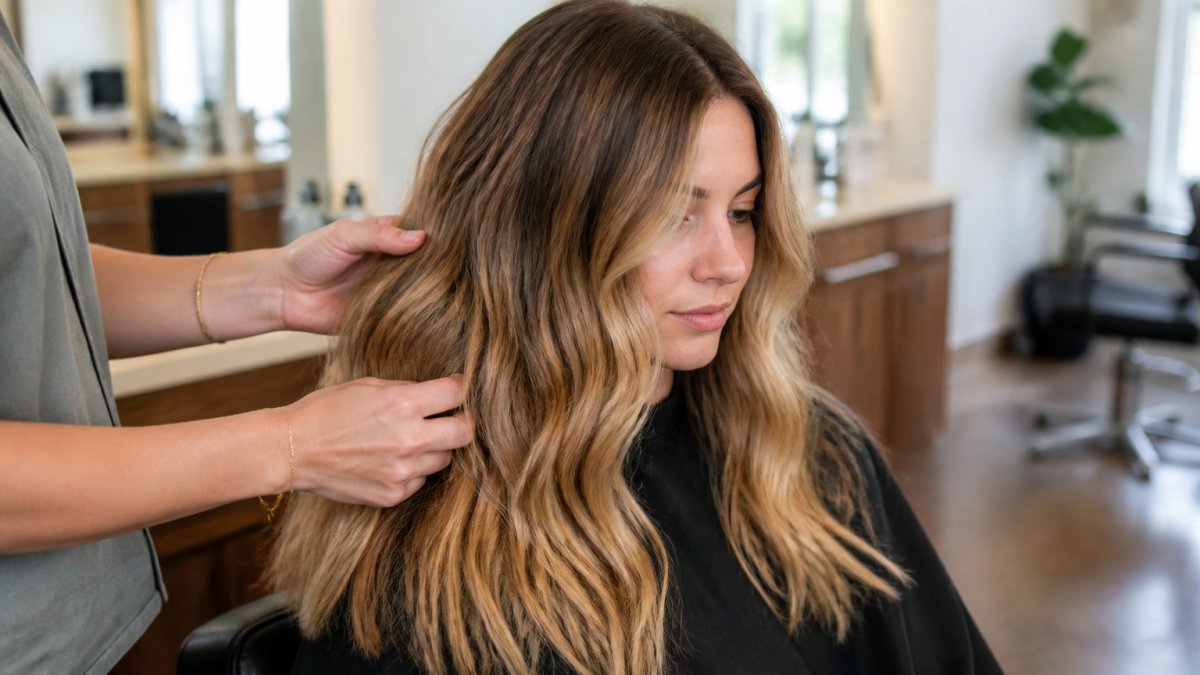
If you want to know how to keep balayage from getting brassy, start with what brassiness is: warm, yellow-orange pigment showing up where you expected cool, soft blonde. It happens because lightened hair loses its cool-toned pigment first, and the warm undertones underneath are what's left behind.
Here's how to spot it early:
- Yellow tones show up first, usually around weeks three to five
- Orange tones appear at the mid-lengths where lift was strongest
- Red tones hide in the darker ribbons and show up in certain light
Catch it early and a light tone refresh handles it. Wait too long and you're looking at color correction instead.
Your Balayage Maintenance Routine: Wash, Treat, Protect
A balayage maintenance routine is the set of washing, hydrating, and heat habits that keep your color cool between salon visits. Get these three right and you'll stretch your time between appointments considerably.
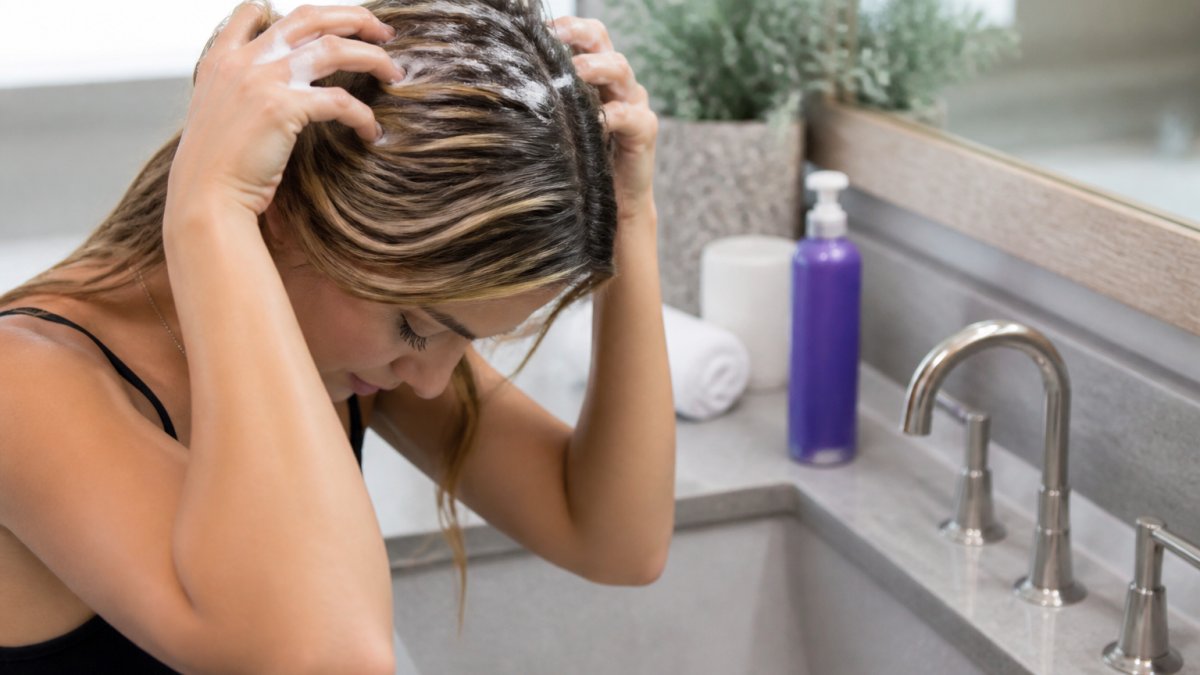
Wash Less, Rinse Cooler
Hot water opens the hair cuticle and lets color slip out faster. Lukewarm water at the rinse stage keeps more pigment in place. Aim to wash two to three times a week, and use dry shampoo on the in-between days.
Hydrate to Slow Color Fade
Dry, porous hair loses color faster than healthy hair. A weekly hair mask helps seal the cuticle and hold tone longer. Look for a color-depositing mask if you want a light refresh built into your routine.
Purple Shampoo for Balayage: When It Helps and When It Doesn't
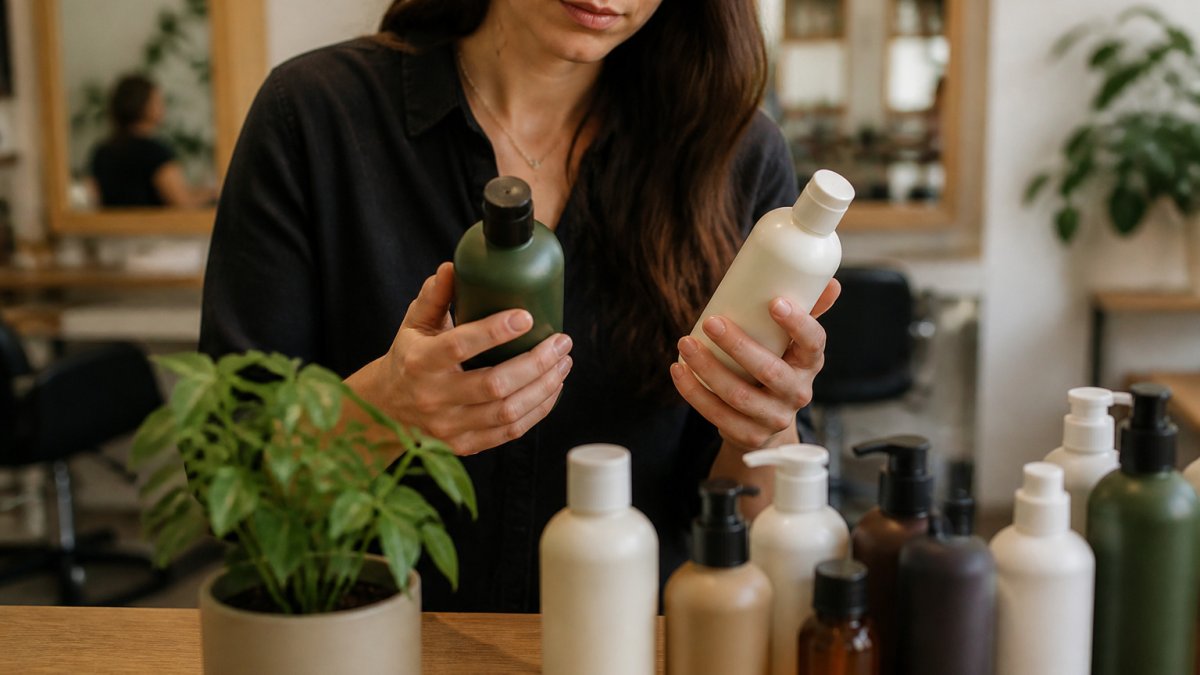
Purple shampoo neutralizes yellow tones, and it works well on balayage that's gone yellow. It does nothing for orange or red tones, and using it too often leaves hair dry and violet-tinged.
- Use it when: you see yellow, your blonde looks dull, or you're between appointments
- Skip it when: your warmth is orange or red, or your hair already feels dry
- Never use it: as your everyday shampoo
How Often to Tone Balayage Without Over-Toning
There is no single correct toning frequency, and any guide that hands you one number is guessing. The safe rhythm depends on three things: how light your balayage is, how porous your hair is, and how strong the toning product is. Get those right and you avoid both brassiness and the flat, muddy over-toned look that is harder to correct.
Start With Your Hair Level
Hair level is the lightness scale stylists use, from level 1 (black) to level 10 (lightest blonde). It tells you how much warmth is exposed and how aggressively a toner will grab.
- Levels 6-7 (dark blonde to light brown balayage): Warmth surfaces fast and toner takes strongly. Keep toning shampoo to once a week and lean on color-safe shampoo the rest of the time.
- Levels 8-9 (medium to light blonde): The sweet spot for most toning routines. Once or twice a week with a toning shampoo, plus a professional gloss every six to eight weeks, holds tone well.
- Level 10 (platinum or high-lift blonde): The most fragile and the most prone to over-toning. Cap toning shampoo at once a week, use a lower-strength formula, and shorten contact time rather than increasing frequency.
Adjust for Porosity
Porosity is how readily your hair absorbs and releases moisture and pigment. High-porosity hair, often from repeated lightening, heat, or chemical processing, grabs toner fast and can turn ashy or gray in a single wash.
A quick check: drop a clean strand in a glass of water. If it sinks within a few minutes, your hair is likely high-porosity and you should tone less often and with gentler products.
Match Frequency to Product Strength
Not all toning products are equal, and treating a strong pigment mask like a daily shampoo is how over-toning happens.
- Toning shampoo (mild): Once or twice a week for most clients; once a week on level 10 or high-porosity hair.
- Toning mask or color-depositing mask (moderate): Every one to two weeks, with a strict contact time, usually five to fifteen minutes. Do not leave it on longer to "get more" tone.
- Professional toner or gloss (strong): Every six to eight weeks in the salon. This is the reset, not the routine.
Know the Signs of Over-Toning
Over-toning is not just "too ashy." Watch for these signals and back off when you see them:
- Color looks flat, gray, or slightly green rather than cool and dimensional
- Ends feel drier and more brittle after toning than before
- Tone fades to a dull, muddy cast instead of returning to a clean blonde
If you notice any of these, stop toning shampoo for two to three weeks, switch to a hydrating color-safe routine, and let the tone settle. A professional can usually rebalance over-toned hair with a gentle cleanse or a warmer gloss, but home bleaching to "fix" it is the wrong move and can cause real damage.
How to Fix Brassy Balayage: A Step-by-Step Plan
Knowing how to keep balayage from getting brassy means matching the toning product to the exact warmth you're seeing, then resetting buildup before you tone. Skip either step and you'll fight the same brassiness again in two weeks.
Step 1: Diagnose the Tone
Look at your hair in daylight and name the warmth: yellow, orange, or red. This single step decides which product you need.
Step 2: Choose the Right Toning Product
| What You See | Product to Use | How Often |
|---|---|---|
| Yellow tones | Purple shampoo or mask | 1-2 times weekly |
| Orange tones | Blue shampoo | 1-2 times weekly |
| Red tones | Blue-green or cool toner | Weekly, short contact |
| Dull, no warmth | Clarifying wash, then tone | As needed |
Step 3: Reset Buildup Before You Tone
Product buildup and mineral deposits block toner from working evenly. Use a clarifying treatment first, then tone. Your color will take more evenly and last longer.
Hard Water, Heat, and UV: The Hidden Causes of Brassy Balayage
Hard water leaves mineral buildup that dulls color and pushes warmth forward. If your shower leaves spots on glass, it's doing the same to your hair. A chelating treatment once a month removes those minerals.
Heat and sun cause color fade too. Hot tools and UV light break down cool pigments faster than warm ones.
Balayage Care by Hair Type and Starting Color
A toning routine that works on a fine, level-9 blonde can wreck a coarse, level-5 brunette with heavy lift. Balayage is dimensional, which means different parts of the same head can behave differently. Build your routine around your hair type and starting color instead of copying a generic plan.
Fine Hair
Fine hair has less cortex to hold pigment and fades fastest. It also shows over-toning quickly because there is less hair to diffuse the color.
- Wash two to three times a week at most, and use a volumizing color-safe shampoo rather than a heavy one
- Keep toning shampoo to once a week and use a lower-strength formula
- Choose lightweight masks and avoid heavy oils that weigh down the ends
Coarse Hair
Coarse hair holds tone longer but can look dry and dull when the cuticle is raised. Hydration is the priority.
- A richer, moisturizing color-safe shampoo and conditioner pair works better than a lightweight one
- Weekly hydrating mask keeps the cuticle smooth so tone reflects light evenly
- Toning shampoo once or twice a week is usually safe, but watch for dryness before increasing frequency
High-Porosity Hair
Porous hair, common after multiple lightening sessions, absorbs toner fast and releases it fast, so it can look over-toned one day and brassy the next.
- Use a bonding or reparative treatment weekly to help smooth the cuticle
- Tone less often and with gentler products; short contact times matter more than frequency
- Avoid hot water and high heat, which raise the cuticle further
Starting From Dark Brown or Black
More lift means more exposed warm undertone, so warmth surfaces sooner and more stubbornly. Expect brassiness earlier than a client who started lighter.
- Plan on a professional toner or gloss closer to every six weeks
- Use blue shampoo rather than purple if the warmth reads orange
- Clarify and chelate regularly, because buildup on heavily lifted hair blocks toner
Starting From Light or Already-Blonde Hair
Lighter starting colors hold cool tones longer with less effort, but they are also the most vulnerable to over-toning.
- Purple shampoo once or twice a week is usually enough
- Watch for gray or violet casts and pull back immediately if they appear
- A color-depositing mask every other week can replace a salon visit for some clients
Gray-Blended Balayage
Gray hair is often coarser, less pigmented, and more resistant to toner, and it can turn yellow quickly from heat and product.
- Use a color-safe, moisturizing routine and a weekly mask
- Toning shampoo once a week helps manage yellow, but do not overdo it on resistant gray
- A professional toner formulated for gray-blended hair gives more even, longer-lasting results than at-home products
At Sunbeam Hair Studio, we build each client's toning schedule around starting color, porosity, and hair texture, so the plan fits the hair instead of a generic rule.
Conclusion
Brassiness is a maintenance problem, not a color failure. Wash cooler, hydrate weekly, tone on a schedule, and treat your water and heat exposure as part of the routine. If your balayage keeps turning warm no matter what you try, a professional tone and a personalized plan will get you back to the cool, dimensional color you wanted.
Frequently Asked Questions
How often should I use purple shampoo on balayage?
Start with once a week, and never leave it on longer than five minutes. If your balayage is very light or porous, use it every other wash. Overuse can leave a lavender cast on cool-toned hair and make ends feel dry. Pair it with a moisturizing conditioner each time. If you notice a purple tint, skip a week and use a color-safe shampoo instead. A stylist can adjust the frequency based on your starting color and how quickly your hair pulls warm.
What causes balayage to turn brassy?
Brassiness comes from warm undertones in the hair being exposed as the toner fades. Lightened hair has an underlying pigment that shows through over time, especially with sun, heat tools, and frequent washing. Hard water minerals can also sit on the cuticle and make blonde look dull or orange. Balayage is hand-painted, so the lightened pieces are more vulnerable than roots. Regular toning and a color-safe routine slow the process, but some warmth is normal between appointments.
How can I fix brassy balayage at home without damaging my hair?
Start with a clarifying wash to remove buildup, then apply a toning mask or purple shampoo matched to your tone. For yellow, use purple; for orange, use blue. Leave it on for the recommended time only, and follow with a deep conditioner. If the brass is still strong after two weeks, book a salon gloss or toner. Avoid bleach or high-lift color at home. A professional can adjust the toner without compromising the health of your balayage.
How often should I maintain balayage?
Most balayage clients return every 8 to 12 weeks for a gloss or toner refresh, and every 12 to 16 weeks for a full highlight or balayage touch-up. If you use purple shampoo weekly and wash less often, you can stretch the time between appointments. Hard water or frequent heat styling may shorten the cycle. Your stylist can set a schedule based on your starting color, porosity, and how fast your hair fades. Book a quick gloss when you first notice warmth.